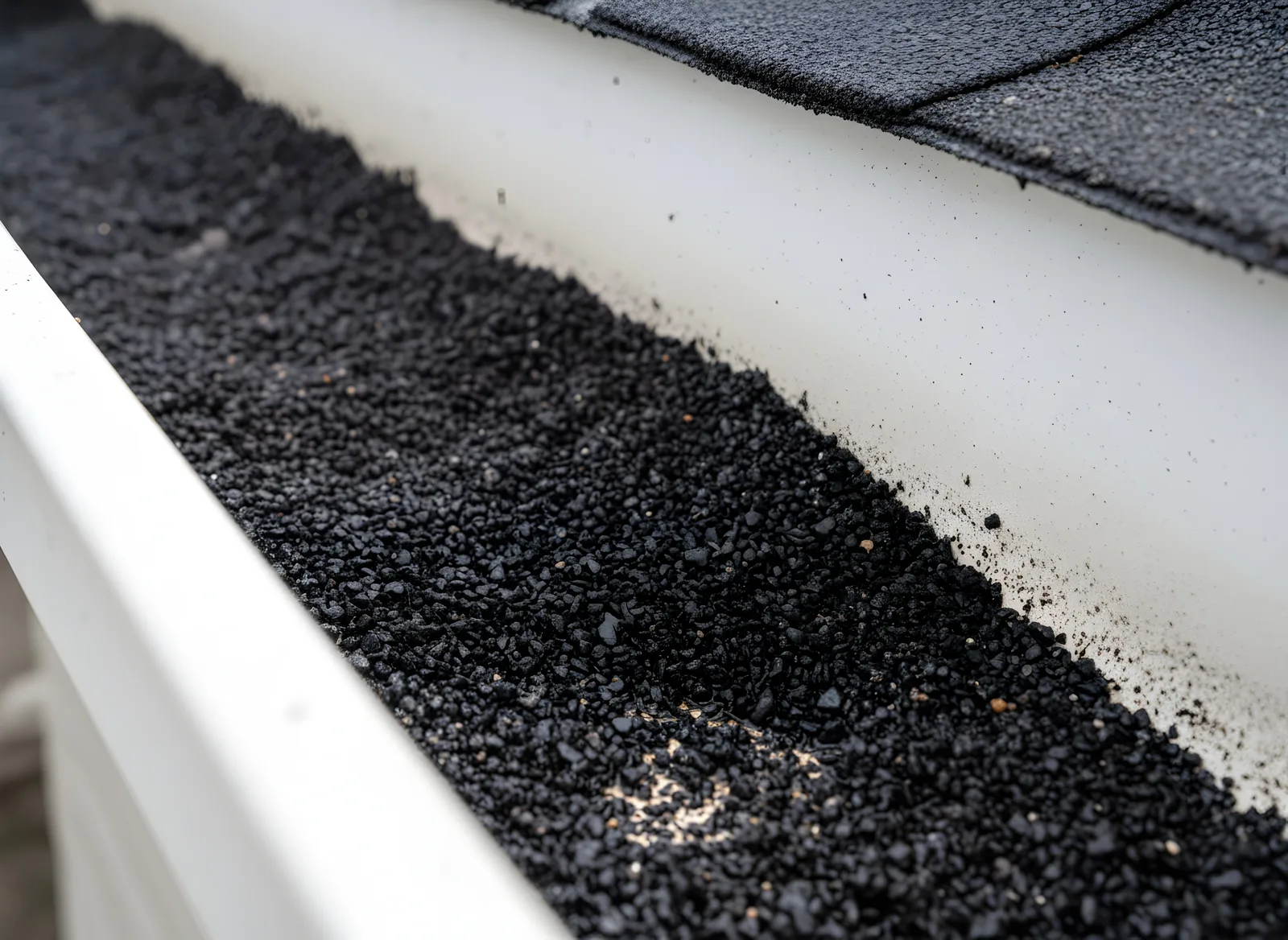
If you have found granules in gutters or a dark, sandy grit at the bottom of a downspout after a heavy rain, your asphalt shingle roof may be telling you something. For Southwest Florida homeowners, that grit can be one of the first visible signs that aging shingles are drying out, losing flexibility, and shedding part of their protective surface.
What are shingle granules?
Asphalt shingles are covered with a protective mineral coating. That grit is typically ceramic-coated stone and slag, bonded to the asphalt core when the shingle is made.
Those granules do important work. They help protect the asphalt underneath from:
- UV rays
- High temperatures
- Weather
- Impacts
They also help lower the shingle’s flammability.
Granule loss is the gradual shedding of that protective mineral coating. Once enough granules are gone, there is no practical way to put them back. The goal is to slow the loss before the roof gets too far along.
Why shingles start shedding granules
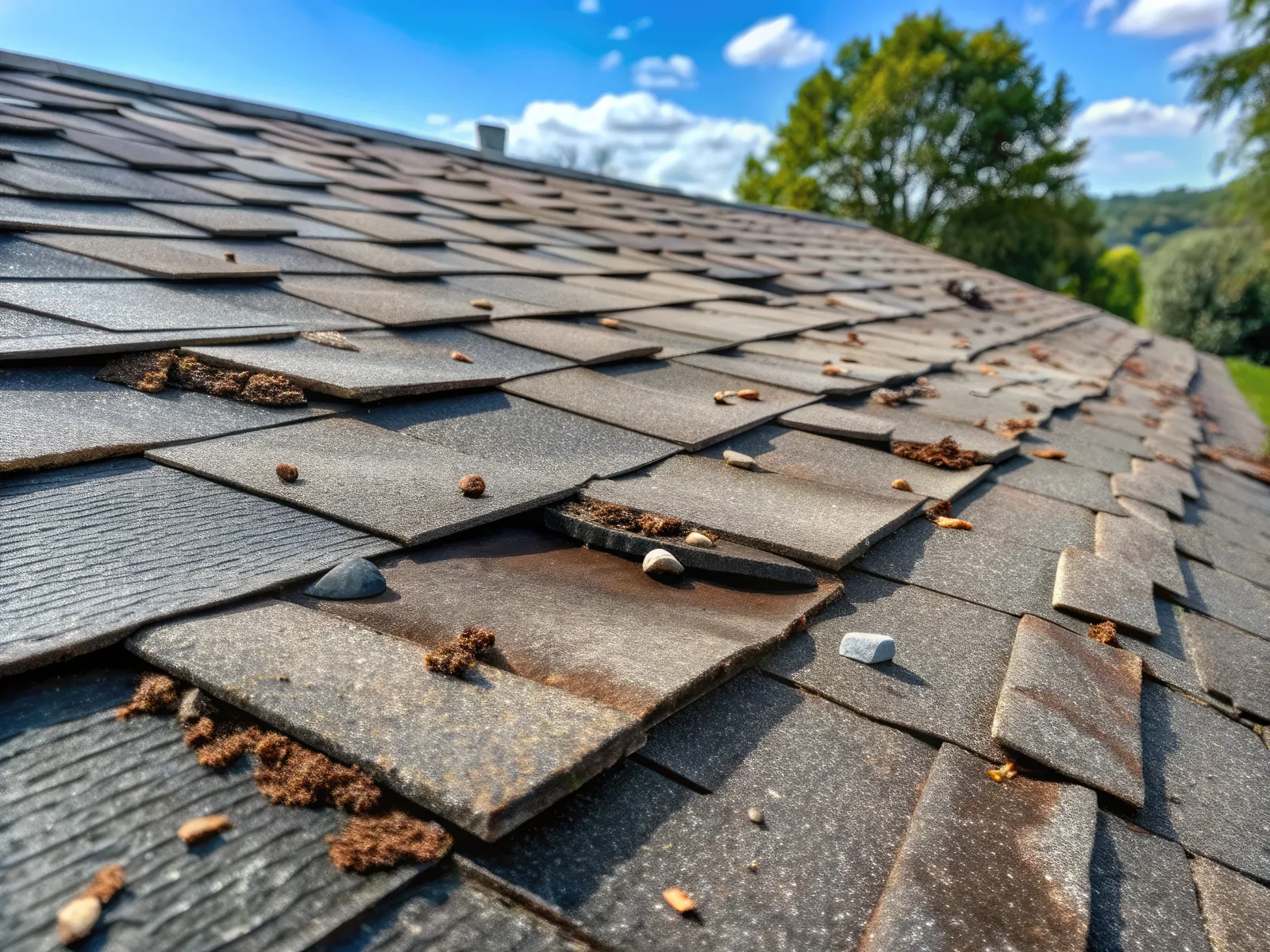
As asphalt shingles age under sun and storms, they dry out and lose flexibility. When the oils in the asphalt are depleted, the shingle becomes stiff and brittle. That makes it more likely to crack, curl, and shed granules.
Flexible shingles are better able to expand and contract properly. Brittle shingles cannot move the way they should, and the granules can start losing their grip on the shingle mat.
When granules in gutters are normal
A few granules here and there are normal. A small amount after a storm can also be normal.
In Southwest Florida, homeowners often notice shingle grit during the rainy season, which runs from May 15 to October 15 according to the National Weather Service. Heavy rain can wash loose grit off the roof and into gutters, downspouts, patios, decks, or along the roofline.
That does not always mean there is a serious problem. But it is worth paying attention to how much grit you are seeing and whether it keeps showing up.
When granule loss is a warning sign
Heavy granule loss is never normal.
Watch for:
- Large piles of grit in gutters, at downspouts, or along the roofline
- Heavy or sustained shedding after repeated rains
- Visible bald patches on shingles
- Shingles that are curling or cracking
If you see grit, pick some up. Shingle granules should feel coarse and gritty between your fingers. Dark or greyish sandy material in gutters or below downspouts after rain is a common early sign of granule loss.
What granule loss means for Roof Maxx treatment
Roof Maxx is a plant-based treatment made from soybean oil. It soaks into asphalt shingles and restores flexibility by replenishing the oils that dry out as shingles age.
That flexibility matters. When shingles can expand and contract properly, it helps granules stay bonded to the shingle mat and can reduce premature loss.
However, Roof Maxx will not bring back granules that are already gone, and no treatment can stop granule loss entirely. Timing is important.
Roof Maxx does not suggest treating until the top granule coating begins shedding, because that is a sign the roof is under stress. In warmer southern climates, a roof less than 5 to 7 years old likely still has much of its original oil. The best candidates are aging but structurally sound asphalt shingle roofs, typically 10 to 20 years old.
Dealers will not treat a roof that has lost 30% or more of its protective granules, or one with repeated problems. That is why noticing granule loss early can matter.
You can learn more about the process here: How Roof Maxx works.
What happens during a Roof Maxx treatment?
Each Roof Maxx treatment includes a tune-up as part of the process. That includes:
- Replacing or securing loose or missing shingles
- Resealing flashings
- Hammering down and sealing nail pops
- Checking the structure
Then the plant-based Roof Maxx treatment is applied to the asphalt shingles.
One treatment is guaranteed to strengthen and extend the roof’s life by five years. Repeat treatments every five years can extend it up to 15 years, backed by a 15-year transferable flexibility warranty.
A treatment usually takes a few hours, depending on the size and condition of the roof.
Seeing granules in your gutters? Get a free roof health check.
If you are seeing granules in gutters, downspouts, or around your home, Roof Maxx of Fort Myers can take a look. The roof health check and quote are free.
Roof Maxx of Fort Myers serves homeowners in Fort Myers, North Fort Myers, Cape Coral, Punta Gorda, Port Charlotte, Fort Myers Beach, Sanibel, Captiva, Estero, Bonita Springs, Naples, Marco Island, Lehigh Acres, LaBelle, Immokalee, and Arcadia.
To get started, request a free quote or call 941-981-0120.